

Knowledge · Neuromarketing
The Proust effect: the power of involuntary memories
A scent can take a person back in seconds to a moment many years ago. How this works neurologically – and how brands use this power.
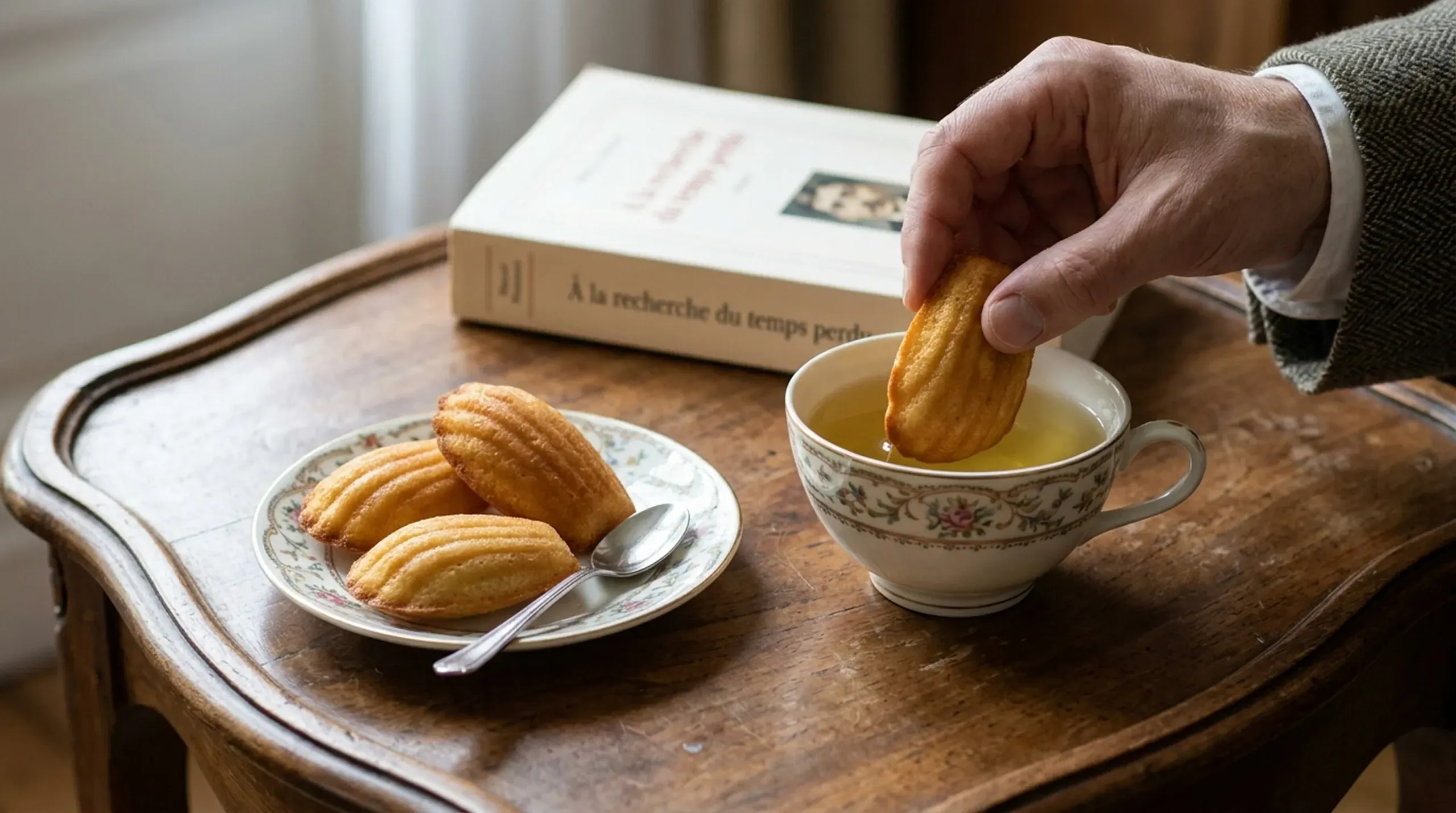
What is the Proust effect?
- ✓︎What it is: a scent, taste or sound evokes a memory unbidden
- ✓︎Where the name comes from: the madeleine scene in Proust’s novel
- ✓︎Why it works: the sense of smell and emotion are processed in the same brain area
- ✓︎What you can achieve with it: a signature scent that anchors your brand in memory

Involuntary memory: memories you don’t go looking for
The Proust effect is an example of what psychologists call “involuntary memory”: memories that surface without our consciously searching for them.
This contrasts with “voluntary memory”, where we make a conscious effort to remember. Research suggests that involuntary memories are often more vivid and more emotionally charged than their voluntary counterparts.
The reason: they are often triggered by sensory stimuli such as scents or tastes that are closely linked to emotional experiences. Read more under how the limbic system works.
Why do smells affect emotions faster than images or music?
Olfactory bulb
Scent molecules reach the olfactory mucosa and are passed directly to the olfactory bulb.
Limbic system
From there, the signal goes straight into the limbic system – without a detour via the rational filter.
Amygdala & hippocampus
The amygdala processes the emotion, the hippocampus the memory. The two lie right next to each other.
Reaction before awareness
You react emotionally to a scent before you have consciously thought about it.
Invite your guests to an unforgettable experience
The Proust effect and the brain
Neuroscientific research has shown that the brain areas that process scents and tastes are closely connected to the areas responsible for emotion and memory. This explains why sensory stimuli can evoke memories so powerfully. When we smell a particular scent, it sets off a chain reaction in the brain in which memories are retrieved together with the emotions attached to them.
How the limbic system works ›The Proust effect and dementia
Remarkably, research suggests using the Proust effect to support people with dementia. Because involuntary memories do not require the same cognitive effort as voluntary ones, they often remain accessible to those affected for longer. Through sensory stimuli such as familiar scents from the past, carers can evoke precious memories and so contribute to quality of life.
Scent marketing in healthcare ›The deeper meaning
The Proust effect is a fascinating example of the power and complexity of our memory. It reminds us that our experiences are stored not only in words and images, but equally in scents, tastes and sounds. By preserving and using these sensory memories, we experience our past in a deeper and richer way.
It opens up the possibility of travelling through time – reliving moments of joy, sorrow, love and loss. The Proust effect is a reminder of the beauty of life, captured in the simple, everyday experiences we often overlook. It is an invitation to live more consciously and to pay attention to the world around us.
Your own madeleine: a scent that anchors your brand
What the madeleine was for Proust, a signature scent can be for your organisation: a stimulus that takes your guest back, months later, to the moment they walked in.
This requires consistency. The same composition, at constant intensity, distributed by a professional scent system – so that the association can take hold instead of being diluted.
Congruence is just as important: the scent must match what your guests see and expect. A contradiction between image and scent is noticed immediately – and negatively.

Questions about the Proust effect
What is the Proust effect and how is it used in marketing?
The Proust effect – named after Marcel Proust and his madeleine scene – describes how a scent immediately and involuntarily evokes deep memories and emotions. In marketing, this mechanism is used when a brand applies a consistent signature scent. This creates an emotional bond that goes far beyond visual advertising: the scent itself becomes a memory anchor for the brand.
Why do smells affect our emotions faster than images or music?
Can the Proust effect also evoke negative associations?
Can the Proust effect be used deliberately for brand loyalty?
Is there scientific evidence for the Proust effect in neuromarketing?
Is the Proust effect also used in care?
Yes. Because involuntary memories do not require the same cognitive effort as conscious recollection, they often remain accessible to people with dementia for longer. Familiar scents from the past can evoke precious memories, which can contribute to quality of life. In care facilities, ambient scenting is therefore also used as part of a healing environment.


