

Proven in practice · since 2007
Scent marketing field research: proven results
Scent doesn’t just make a space smell pleasant; it touches emotion directly and subconsciously influences how people perceive an environment.
Since 2007, Zaluti has been transforming demanding environments – transport hubs, car parks, healthcare and retail – with strategic ambient scenting. Our concepts have a direct effect on atmosphere, perceived social safety and customer experience.
The following case studies show the measurable effect of our work across different sectors. We are happy to explain further results and specific data in a personal conversation. Would you like the scientific basis first? Then read the scientific evidence for scent marketing.
Field studies in metro stations
Scent and music on metro platforms
Scent and music ease the wait, improve the experience on the platform and are now a fixed part of the station concept.
Context & set-up: in a pilot project, light, music and a subtle, fresh citrus scent were combined to improve the waiting experience. The scent was dosed low so that it enhanced the atmosphere without seeming dominant.
- ✓︎Passengers perceived the waiting time as up to three times shorter.
- ✓︎The stations seemed fresher, cleaner and safer.
- ✓︎Passengers described a noticeably friendlier, softer atmosphere.
- ✓︎The scent was rarely noticed consciously, yet effectively steered the entire positive perception.
- ✓︎The deployment was so successful that in 2019 it was permanently extended to several stations.
The case shows how carefully integrated scent contributes permanently to calm, comfort and a higher quality of stay in large transport environments. Read more under ambient scenting in transport.
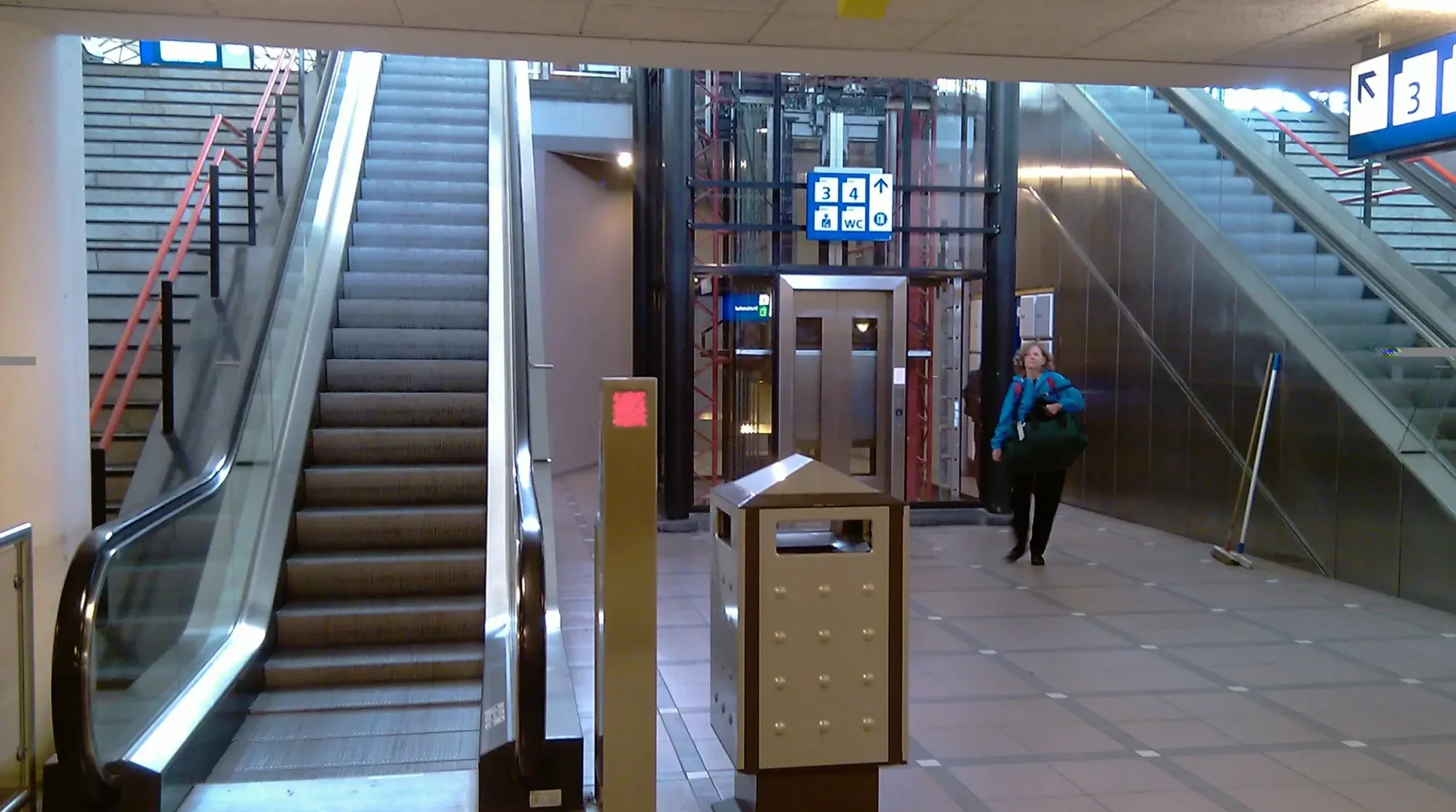
Scent in lifts against urine odour
Scent was successfully used as a targeted solution against persistent odour nuisance.
Context & set-up: in the station lifts, five scents – including freesia and citrus – were tested to tackle the persistent odour nuisance. Passengers could give direct feedback on their preference via QR codes.
- ✓︎The urine odour was significantly reduced and neutralised at the source.
- ✓︎The lift was immediately perceived as much fresher and more pleasant.
- ✓︎Citrus and freesia scored best with passengers.
- ✓︎The successful pilot project led to permanent follow-up measures in the station.
Lifts often shape the first impression of a station. The case proves that scent contributes in a practical way, directly, to a cleaner, more accessible transport environment.
Fresher underground waiting areas
Scent made deep, musty metro environments friendlier and more pleasant.
Context & set-up: subtle scents were distributed at a low dose in waiting areas, tunnel passages and at station entrances.
- ✓︎Passengers perceived the stations as much fresher.
- ✓︎Musty and damp odours decreased noticeably.
- ✓︎The harsh, "underground" atmosphere was effectively softened.
- ✓︎Passengers more frequently stated that the station actually felt clean.
Underground transport facilities benefit directly from scent interventions. This shows the strong, subconscious influence of scent on the perception of hygiene and comfort.
Field studies in care facilities and clinics

Emergency department – waiting areas in two hospitals
Warmer scents supported friendlier social encounters and reduced tension in everyday hospital life.
Context & set-up: in the waiting areas of the emergency department, warm, calming scents – such as vanilla and fig – were used to reduce the natural tension among patients and companions and create a softer atmosphere.
- ✓Visitors rated the nursing staff as friendlier and more helpful.
- ✓Staff found contact with patients calmer.
- ✓The build-up of tension in the waiting areas decreased noticeably.
The study shows how scent can positively steer human interaction and reduce stress or aggression in highly complex, emotional care situations. Read more under ambient scenting in hospitals.
Field studies in public transport

Alongside the metro projects, we carry out studies in trains, trams and buses. We explain the full results and the measurement set-up in a personal conversation – and on the page ambient scenting in transport you can read our approach per zone.
Field studies in car parks
In car parks, stairwells and lifts, we measure the effect on perceived hygiene and social safety. You will find our approach per zone under odour neutralisation in car parks; we discuss the measurement data on request.
How we measure in practice
Baseline measurement
We record the starting situation: which odours occur in which zones and how visitors or employees currently rate the space.
Pilot in one zone
A few weeks, low dose, with a scent we choose together with you. Without announcement, so that the reactions are unbiased.
Measure
Surveys, direct feedback via QR codes or observation – depending on the environment. In lifts, QR feedback has proved particularly reliable.
Fine-tune and roll out
Based on the results, we adjust intensity and scent selection; you then extend to the remaining zones with the evidence to back you.
Questions about field research
What is field research in scent marketing?
Field research in scent marketing measures the effect of scent in a real environment rather than in the laboratory. In a pilot project, a scent is distributed at a low dose, after which the perceptions of visitors, passengers or patients are recorded through surveys, observation or direct feedback. This shows whether scent actually contributes to atmosphere, perceived safety and perceived hygiene in practice. For the theory, see scientific evidence.
